
Iran war escalation intensifies: Saudi pipeline attacked, Houthis seize Red Sea port, oil hits US$108 — Trump says it ends after midterms

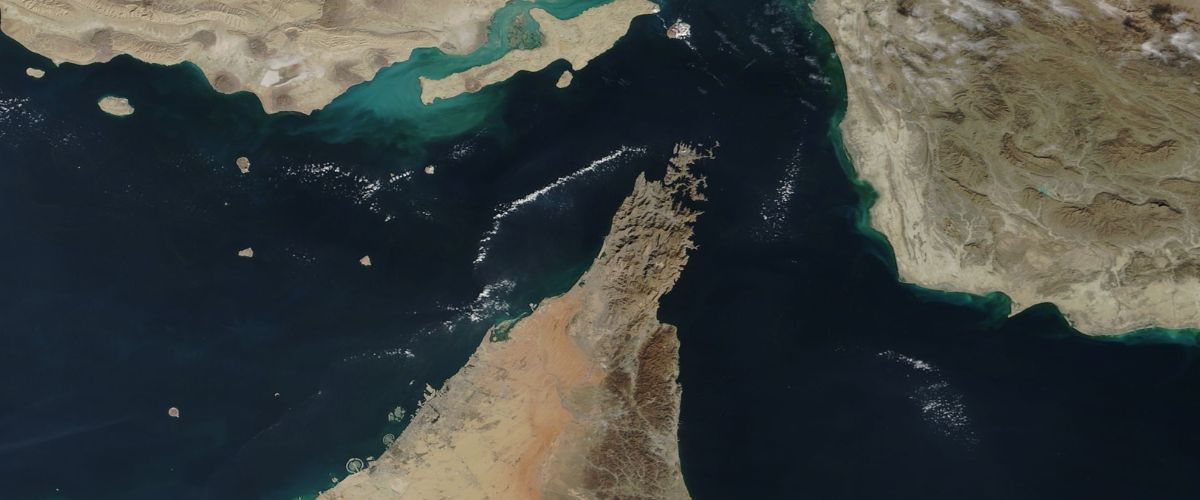
Photo: Satellite image of the Strait of Hormuz
MIDDLE EAST: The Middle East conflict entered a new and more dangerous phase this week as drone attacks shut Saudi Arabia’s crucial East-West crude pipeline, Yemen’s Houthi rebels seized the port city of Mokha and advanced toward the strategically vital Bab el-Mandeb Strait, and oil prices spiked to their highest levels in months, while President Donald Trump predicted the war would end “right after the midterms,” according to CNBC.
Brent crude oil futures peaked at approximately US$108 (S$137) a barrel on Thursday before retreating 2.8% to settle at US$104.61 on Friday. US West Texas Intermediate settled at US$100.05 per barrel, down 2.4%. The partial pullback came after Iranian state media indicated Tehran would meet with Gulf states in Oman to discuss the Strait of Hormuz, which is a sign of diplomacy amid the escalation.
Trump: War ends after midterms, oil will tumble
Speaking to reporters in Ireland on Saturday, Trump said the Iran war would likely end shortly after November’s midterm elections. “I think very soon, I think it’ll be right after the midterms, actually,” he said, as CNBC reported. “I would say shortly, and oil will come tumbling down when that happens.”
Trump also said Iran was likely responsible for the drone attacks on Saudi Arabia’s East-West pipeline. “Well, I think they are. Probably, they are,” he told reporters. He said he had spoken with Saudi Crown Prince Mohammed bin Salman following the attack.
Saudi pipeline shut after drone strikes
Saudi Arabia shut down its East-West crude oil pipeline as a precautionary measure after multiple drones launched from Iraq struck it in the Riyadh and Medina regions on Thursday, causing fires and some damage, the Saudi government said. Several people were injured, according to CNBC.
The pipeline, which has a capacity of 7 million barrels per day and runs across the kingdom to export terminals on the Red Sea, has been critical to Saudi Arabia's ability to shift crude exports away from the Persian Gulf as the US and Iran battle for control of the Strait of Hormuz. Emergency teams were deployed to assess the pipeline's safety following the attacks.
Houthis seize Mokha, advance on Bab el-Mandeb
In a significant development on Yemen’s western coast, Houthi rebels seized the port city of Mokha on the Red Sea on Thursday and advanced to Yemen's strategic Perim Island on Friday.
The rapid Houthi offensive represents a severe setback for Saudi Arabia and the Yemeni forces it backs, and puts Iran and its proxies on course to exercise influence over two critically important oil chokepoints on either side of the Arabian Peninsula: the Bab el-Mandeb Strait and the Strait of Hormuz.
Saudi Crown Prince Mohammed bin Salman reportedly pressed Trump personally for US military intervention following the Houthi advance, according to CNBC, citing MS NOW.
Enjoying this article?
Subscribe to get more stories like this delivered to your inbox.
Trump also said the Houthis had been in contact with his administration. “The Houthis called us, and they don’t want to fight with us,” he said. “They let us know, they don’t want to fight with us.”
Why this matters for Singapore
The simultaneous threat to both the Strait of Hormuz and the Bab el-Mandeb Strait represents the worst-case scenario for global energy supply chains, including Singapore. As one of the world’s largest bunkering and oil trading hubs, Singapore’s role in the global energy system is directly tied to the free flow of oil through both waterways.
A Houthi-controlled Bab el-Mandeb would effectively place Iran and its proxies in a position to threaten energy shipments from both ends of the Arabian Peninsula, with profound consequences for oil prices, shipping costs, and the broader global economy that Singapore’s trade-dependent economy is acutely exposed to.
Writer